Sauna vs Steam Room: Which Is Better for You?
20+ years in holistic health. Lived in Finland and Sweden, where the sauna isn't a luxury, it's what happens before dinner. First-hand witness to 90-year-old Finns who still chop their own wood and credit the sauna for everything.
Quick Answer
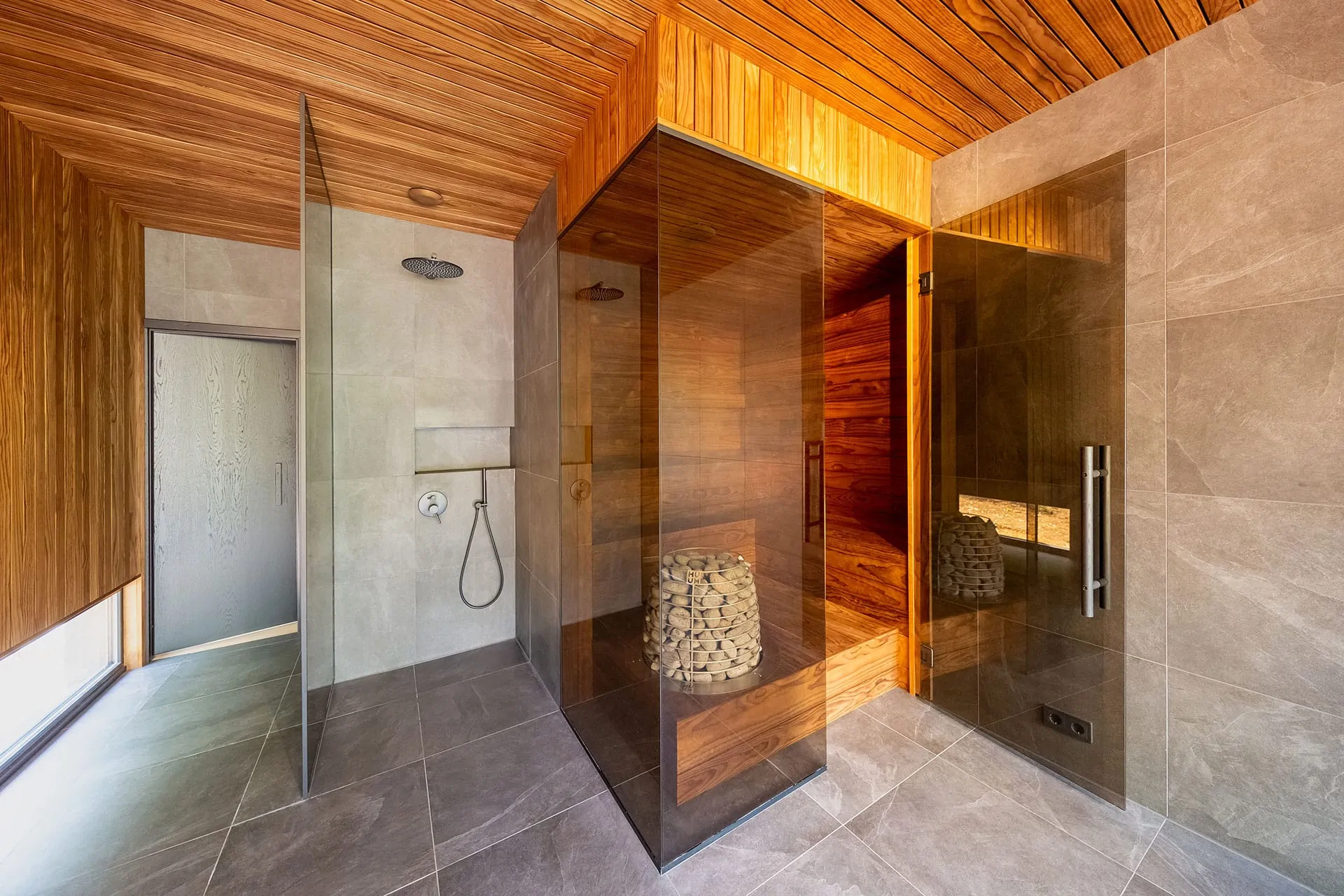
Dry Heat vs Wet Heat: The Core Difference
A sauna and a steam room both use heat to make you sweat, relax your muscles, and raise your heart rate, but they get there in opposite ways. A sauna heats the air with an electric or wood heater and a bank of stones, pushing the temperature to a dry 150 to 195F while humidity stays low, usually between 5 and 30%. A steam room uses a steam generator to saturate the air with moisture, holding humidity at 100% while the thermostat sits far lower, around 110 to 120F.
That contrast in humidity is the whole story. In a dry sauna, your sweat evaporates, and evaporation cools your skin, which is exactly why you can sit comfortably at 175F. In a steam room, the air is already holding all the water it can, so your sweat has nowhere to go. It stays on your skin, your body loses one of its main cooling mechanisms, and your core temperature can rise quickly even though the room feels cooler on the thermometer.
Side by Side Comparison
Sauna vs Steam Room
| Factor | Sauna (Dry Heat) | Steam Room (Wet Heat) |
|---|---|---|
| Temperature | 150 to 195F | 110 to 120F |
| Humidity | 5 to 30% | 100% |
| Heat source | Electric or wood heater, hot stones | Steam generator |
| Materials | Wood (cedar, spruce, hemlock) | Sealed tile, glass, or acrylic |
| Best known for | Cardiovascular health, muscle recovery | Respiratory relief, skin hydration |
| Home install | Moderate; infrared can use 120V | Complex; needs waterproofing and drain |
| Session length | 10 to 20 minutes | 8 to 15 minutes |
Health Benefits: Where Each One Wins
Both deliver the core heat-therapy effects: relaxation, improved circulation, and muscle relief. But the evidence and the practical strengths point in different directions depending on your goal.
The sauna has the stronger longevity and cardiovascular research. The long-running Finnish cohort studies that linked frequent sauna use to lower cardiovascular and all-cause mortality were conducted in traditional dry saunas. Regular dry-heat exposure has been associated with improved blood pressure and reduced risk of stroke and dementia in observational studies. This is association, not proof of causation, but it is the deepest evidence base in the category. We grade each of these claims by strength in our health benefits guide.
The steam room has the edge for respiratory and skin comfort. The warm, moist air helps open airways, loosen mucus, and ease congestion from colds and allergies, which is why so many people gravitate to steam when their sinuses are blocked. The humidity also hydrates the skin and helps open pores. If your priority is breathing easier or moisturized skin, steam has a real, if smaller, advantage.
Best Choice by Goal
| Goal | Better Choice | Why |
|---|---|---|
| Heart and circulation | Sauna | Deep long-term research on regular dry-heat use |
| Sinus and congestion | Steam room | Humid air opens airways and loosens mucus |
| Skin hydration | Steam room | 100% humidity adds moisture to the skin |
| Muscle recovery | Either | Both relax muscles; moist heat may feel faster |
| Longest sessions | Sauna | Dry heat is easier to tolerate over time |
| Easiest home install | Sauna | No waterproofing or steam generator needed |
Installing One at Home
This is where the sauna pulls clearly ahead for most homeowners. A home sauna is a heated wooden room, and while a traditional unit needs a 240V circuit and ventilation, a compact infrared cabin can plug into a standard 120V outlet and needs no plumbing. You can put one in a basement corner or spare room without major construction. Read the full electrical and ventilation checklist in our installation guide.
A home steam room is a bigger commitment. Because it runs at 100% humidity, the entire enclosure must be fully waterproof, built from sealed tile, glass, or acrylic, with a sloped floor drain, a vapor barrier behind the walls, and a dedicated steam generator sized to the room volume. Skip any of those and moisture will find its way into your framing and cause mold or rot. The build is more like a custom bathroom than a piece of wellness equipment.
For running costs on the sauna side, model your own numbers with our cost calculator and read the full cost guide.
Data Point: Why 115F Beats 175F on Perceived Heat
Here is the counterintuitive number that trips up newcomers. A steam room runs roughly 60F cooler than a hot sauna on the thermostat, yet many people find it harder to stay in. The reason is evaporative cooling. In a dry sauna, evaporating sweat can shed a large share of your body heat, so a 175F room stays tolerable. At 100% humidity, that cooling pathway is essentially shut off, so your body has to rely on limited alternatives and your core temperature climbs faster. The practical result: steam sessions typically run shorter, 8 to 15 minutes, versus 10 to 20 in a sauna, despite the lower reading on the wall.
Who Should Skip Each One
Skip the steam room if you want the deepest research-backed heat therapy, if you want long relaxed sessions, or if you want a simple home installation. The waterproofing and generator requirements make it the harder and often costlier home project, and the humid heat limits session length.
Skip the sauna if your single biggest reason for buying is sinus and respiratory relief or skin hydration, where moist heat genuinely performs better. That said, most buyers who want an all-purpose home wellness room and easy installation land on a sauna, which is why the rest of this site focuses there.
Frequently Asked Questions
This guide is for educational purposes and is not medical advice. Consult your physician before beginning heat therapy, especially if you are pregnant, on medication, or managing a cardiovascular or respiratory condition.
Affiliate disclosure: Sweat Kingdom and Peak Saunas are affiliate partners of HomeSaunaUSA. We may earn a commission on purchases made through our links, at no extra cost to you. We do not sell or earn from steam rooms; this comparison is purely editorial.