Sauna Heater Guide: Electric vs Wood vs Infrared, and How to Size It
20+ years in holistic health. Lived in Finland and Sweden, where the sauna isn't a luxury, it's what happens before dinner. First-hand witness to 90-year-old Finns who still chop their own wood and credit the sauna for everything.
Quick Answer
Three Heater Types, Three Different Experiences
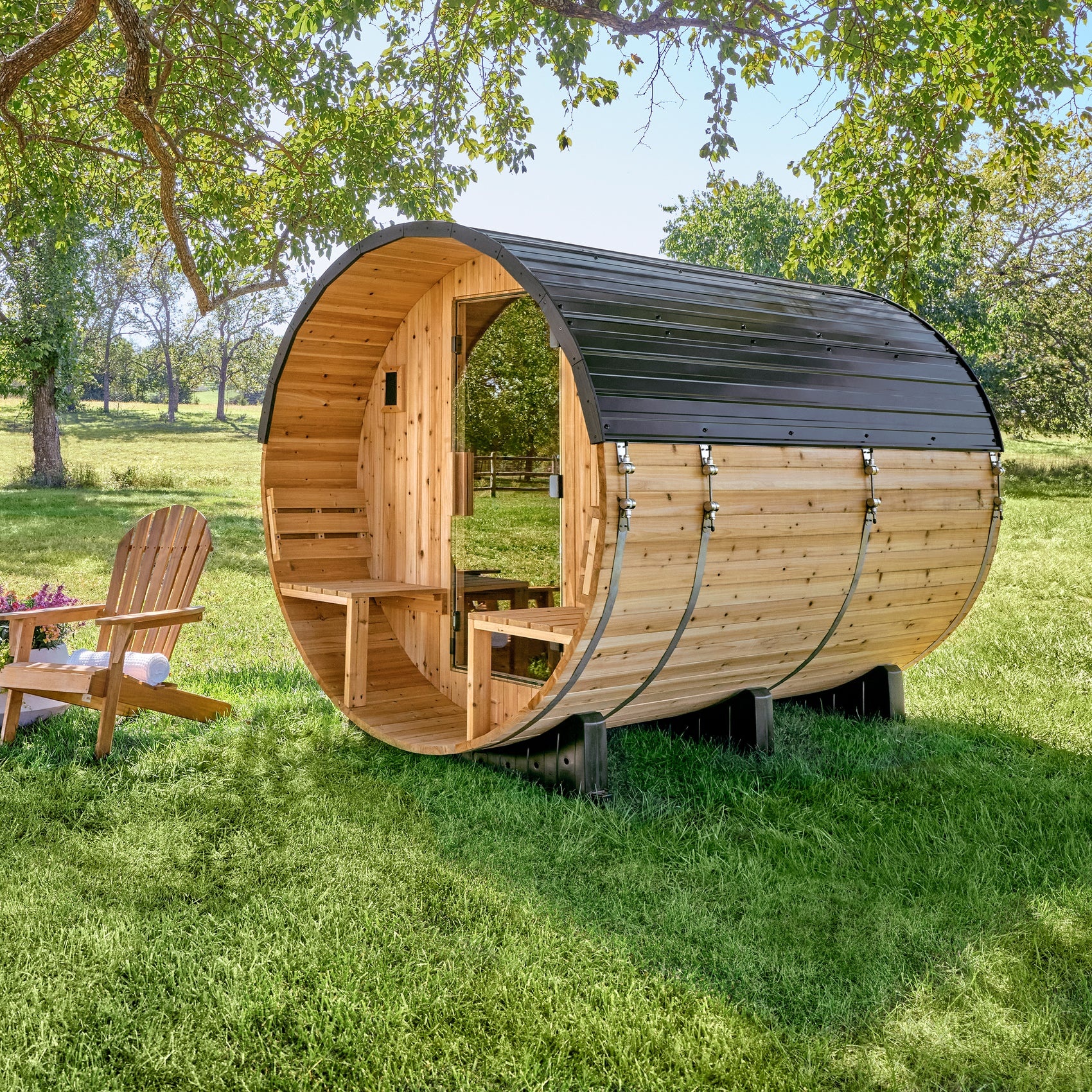
Before you size anything, decide which kind of heat you want, because the three heater types create genuinely different saunas. An electric heater warms a bank of stones with resistance elements, giving you the traditional high-heat, steam-capable sauna with the convenience of a thermostat. A wood-burning stove does the same job with fire, delivering the crackle, aroma, and independence from the grid that purists love. An infrared system skips air heating entirely and warms your body with radiant panels.
None is objectively best. The electric heater is the default for indoor traditional saunas because it is clean and precise. The wood stove is the soul of an outdoor cabin where a chimney and firewood are practical. Infrared is the easy indoor option that runs cool and plugs into a wall. Your space, your access to 240V power, and the experience you want should drive the decision. Our infrared vs traditional comparison digs deeper into how the heat itself feels.
Electric vs Wood vs Infrared, Side by Side
Sauna Heater Types Compared
| Feature | Electric | Wood-Burning | Infrared |
|---|---|---|---|
| Primary heat | Resistance elements and stones | Firebox and stones | Radiant panels |
| Heat-up time | 30 to 60 minutes | 45 to 90 minutes | 10 to 20 minutes |
| Control | Precise thermostat | Manual air vents | Preset or digital |
| Power or fuel | 240V circuit | Firewood | 120V outlet (compact) |
| Maintenance | Low | High (ash, chimney) | Minimal |
| Best for | Indoor traditional saunas | Off-grid and outdoor cabins | Easy indoor installs |
How to Size an Electric Heater
For electric saunas, sizing is a straightforward volume calculation with adjustments. The industry rule of thumb is 1 kW of heater output for every 45 to 50 cubic feet of interior space. Measure the interior length, width, and height in feet, multiply them for the cubic volume, then divide by roughly 45 to 50 to get your baseline kilowatts. A 6 by 6 by 7 foot room is about 252 cubic feet, which points to a 5 to 6 kW heater before adjustments.
Then adjust upward for anything that loses heat. Add about 20% for each additional exterior wall, count large glass areas as extra volume, add 20 to 25% for tile or concrete surfaces, 25 to 30% for poor insulation, and another 10 to 15% for a cold climate. For ceilings above 7 feet, add roughly 10% per extra foot. These adjustments are why two identical-size rooms can need different heaters.
Electric Heater Sizing (baseline, before adjustments)
| Sauna Volume | Approx. Electric Heater |
|---|---|
| 180 to 250 cubic feet | 4.5 kW |
| 250 to 320 cubic feet | 6 kW |
| 320 to 425 cubic feet | 8 kW |
| 425 to 500 cubic feet | 9 kW and up |
Why Infrared Is Sized Differently
Infrared throws the volume formula out, because it does not heat the air. What matters is how much radiant panel surrounds your body and how well it is positioned, so infrared saunas are sized by the number of people rather than cubic feet. Use the panel wattage as your guide, and pay attention to where the panels sit relative to your back, calves, and torso.
Infrared Sizing by Capacity
| Infrared Unit Size | Typical Panel Power |
|---|---|
| 1 person | 300 to 600W |
| 2 person | 1,200 to 1,800W |
| 3 to 4 person | 2,400 to 3,200W |
With infrared, the EMF profile of the panels is also worth checking, since they sit close to your body. We cover which brands publish real third-party lab data in our EMF guide.
The Wood-Burning Option
Wood-burning stoves are rated by the room volume range they can heat rather than by a simple kW formula, but they are powerful. A well-fed stove burning seasoned hardwood produces heat in the same league as a high-kW electric heater, often the thermal equivalent of 8 to 12 kW per hour. That is more than enough for a classic outdoor cabin at full traditional temperature.
The trade-offs are control and chores. You steer the heat with the air vents and the fire itself, not a thermostat, so it takes practice and a longer warm-up of 45 to 90 minutes. You also need a proper chimney, clearances to combustibles, and regular ash and flue maintenance. For an off-grid backyard sauna, many owners consider that ritual part of the appeal. Handcrafted wood-fired outdoor saunas are exactly what Sweat Kingdom builds.
Sizing Mistakes to Avoid
The two failure modes are opposite and both are avoidable. Undersize the heater and it will run flat out, never quite hit 175F, burn extra energy trying, and shorten its own life. Oversize it and it will blast to temperature, then cycle on and off rapidly, producing uneven hot and cool zones and inefficient operation.
The other classic errors: measuring exterior dimensions instead of interior, ignoring a big glass door, and forgetting the climate. A sauna in a cold garage needs more power than the same cabin in a heated basement. Skipping the heat-loss adjustments is how a technically correct baseline calculation still ends up underpowered.
Data Point: The 1 kW per 50 Cubic Feet Anchor
One number anchors nearly every electric sauna heater decision: 1 kW per 45 to 50 cubic feet. It sounds tidy, but the reason buyers still get it wrong is that the baseline is only the starting point. Run the math on a typical 6 by 6 by 7 foot sauna and you get about 252 cubic feet, or a 5 to 6 kW baseline. Add a single extra exterior wall (about 20%), a glass door, and average insulation, and the real requirement can climb toward 7 kW. That is a full circuit-size jump, from a 30A to a 40A breaker, and a different wire gauge. Size from the adjusted number, not the raw volume, and confirm the electrical against our installation guide.
Frequently Asked Questions
This guide is educational. Heater sizing depends on your specific room, materials, and climate, and electrical work should be confirmed by a licensed electrician and your local code.
Affiliate disclosure: Sweat Kingdom and Peak Saunas are affiliate partners of HomeSaunaUSA. We may earn a commission on purchases made through our links, at no extra cost to you. Affiliate relationships never determine our recommendations.