HSA/FSA and saunas: eligible only with a documented medical need (LMN). Savings equal your combined tax rate, roughly 12% to 46%. 2026 HSA limit $4,400 self-only, $8,750 family.
Can You Buy a Sauna With HSA or FSA Funds?
20+ years in holistic health. Lived in Finland and Sweden, where the sauna isn't a luxury, it's what happens before dinner. First-hand witness to 90-year-old Finns who still chop their own wood and credit the sauna for everything.
Some of the products featured here are from partners who compensate us. This can affect which products we cover and where they appear on the page. See how we make money.
Quick Answer
The short version
- Eligible: a sauna whose main purpose is treating a diagnosed condition, documented by an LMN dated before purchase.
- Not eligible: a sauna for relaxation, fitness or general health, with or without a quick-questionnaire note.
- Saving: your combined marginal tax rate (federal, state and, for payroll contributions, 7.65% FICA).
- Catch: 2026 limits ($4,400 self-only HSA, $3,400 FSA) are below the price of most cabins.
- Penalty risk: a non-qualified HSA withdrawal is taxed as income, plus 20% if you are under 65.
When Does a Sauna Count as a Medical Expense?
A sauna counts when its main purpose is medical care for you, your spouse or a dependent. Under Internal Revenue Code section 213, medical care means amounts paid to diagnose, cure, mitigate, treat or prevent disease, or to affect a structure or function of the body. Saunas are not on the list of expenses that qualify automatically, which is why every route to eligibility runs through a provider and a Letter of Medical Necessity.
The line the IRS draws is between a targeted treatment and general health. In news release IR-2024-65 (March 6, 2024), the IRS warned about companies that sell a doctor's note based on self-reported health information to turn wellness purchases into medical expenses. It said such a note does not show the expense is related to a "targeted diagnosis-specific activity or treatment." The release was about food and fitness, but the same logic applies to a sauna.
How Eligibility Usually Plays Out
| Situation | Likely outcome | Why |
|---|---|---|
| Diagnosed condition, LMN from your own clinician before purchase | Usually eligible | Main purpose is medical care, documented before you buy |
| Diagnosed condition, LMN from a seller's provider review (e.g. Truemed) | Often eligible, administrator decides | Provider reviews your answers; keep the LMN with the receipt |
| No diagnosis, LMN written from a short wellness questionnaire | Risky | IRS IR-2024-65: a note based on self-reported general health does not create a medical expense |
| General wellness, relaxation or fitness, no LMN | Not eligible | Expenses that only benefit general health are personal expenses |
| Built-in sauna that raises your home's value | Partly eligible at best | Pub. 502: an improvement counts only to the extent its cost exceeds the increase in property value |
General guidance, not tax advice. Your plan administrator and, if audited, the IRS decide eligibility. Sources: IRS IR-2024-65 (March 2024), IRS Publication 502.
How Much Do You Actually Save?
You save your combined marginal tax rate on the purchase, because the money went into the account before tax. Sellers often quote a flat "25% to 35% off." That figure is this tax effect for a middle-income buyer, not a price cut, and it is lower in the 12% bracket and higher in the 32% bracket.
Contributions through payroll also skip 7.65% Social Security and Medicare tax (FICA). Contributions you make yourself and deduct on your return do not, so take FICA out of the columns below if that is how you fund your HSA. California and New Jersey do not exempt HSA contributions from state income tax, so residents there should drop the state portion too.
Approximate Tax Saving by Bracket (our calculation)
| Sauna (price on Oct 21, 2026) | 12% federal + FICA (19.65%) | 22% federal + 5% state + FICA (34.65%) | 32% federal + 6% state + FICA (45.65%) |
|---|---|---|---|
| Sun Home Eclipse 2 ($9,999) | $1,965 | $3,465 | $4,565 |
| Sun Home Luminar 2 ($10,999) | $2,161 | $3,811 | $5,021 |
| Sun Home Eclipse 4 ($12,999) | $2,554 | $4,504 | $5,934 |
Saving = price × combined rate, rounded to the dollar. Prices from the Sun Home product pages on Oct 21, 2026: Eclipse 2, Luminar 2, Eclipse 4. Any fee charged for the provider review reduces the saving.
The Contribution Limit Problem
Most full-size saunas cost more than one year of HSA or FSA contributions, so the money usually has to be there already. The 2026 HSA limit is $4,400 for self-only coverage and $8,750 for family coverage, and the 2026 health FSA limit is $3,400 per employee (Rev. Proc. 2025-32).
An HSA has one advantage here: there is no deadline to reimburse a qualified expense, as long as the account was open when you bought the sauna. You can pay with a regular card, keep the receipt and the LMN, and pay yourself back over the next years as contributions build up. An FSA is "use it or lose it," so it rarely covers more than a fraction of a cabin.
2026 Limits vs a $10,000 Sauna
| Account | 2026 limit | Enough for a $10,000 sauna in one year? |
|---|---|---|
| HSA, self-only | $4,400 | No, unless you already have a balance |
| HSA, family | $8,750 | Close; existing balance or a second year needed |
| Health FSA (per employee) | $3,400 (carryover up to $680 if your plan allows) | No |
Step by Step: Buying a Sauna With HSA or FSA Money
- Confirm you have an eligible account. An HSA requires a high-deductible health plan (2026 minimum deductible: $1,700 self-only, $3,400 family). A health FSA comes through your employer and has a 2026 limit of $3,400.
- Get a medical evaluation. Ask your own clinician whether sauna therapy treats a diagnosed condition you have, or use a seller's provider review such as Truemed. The provider decides eligibility.
- Obtain the Letter of Medical Necessity before you buy. The LMN should name the condition, the recommended therapy, how often and how long to use it, and carry the provider's signature and contact details.
- Buy the sauna and pay. Pay with your HSA or FSA card, or pay normally and reimburse yourself later. Keep the itemized receipt.
- Submit the claim and keep records. Send the receipt and LMN to your administrator if asked, and keep both with your tax records in case the IRS asks how the distribution was used.
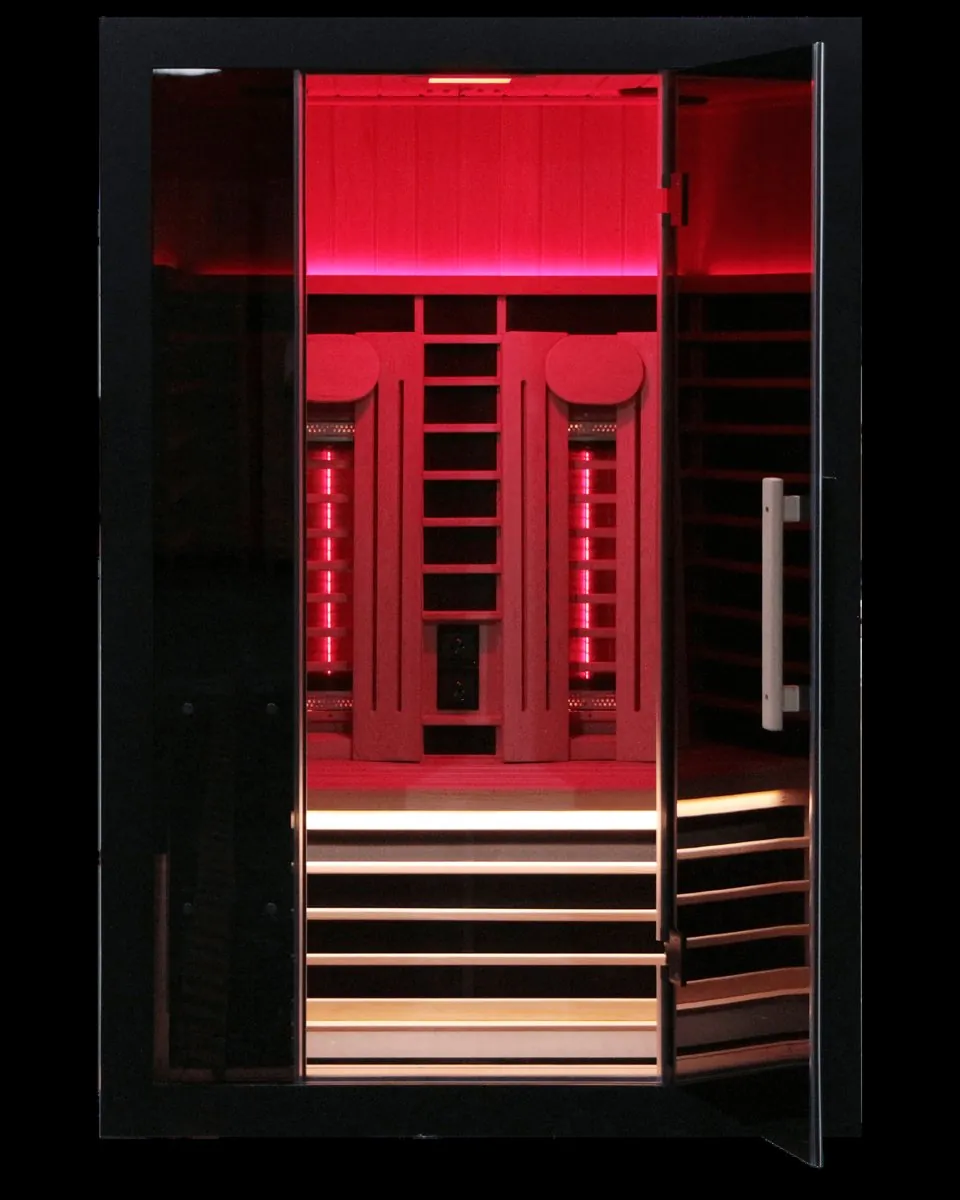
Sun Home is the easiest brand for this today because Truemed lists its saunas: the Eclipse (2 or 4 person), the Luminar 2 outdoor sauna, the Solstice 1-person sauna and an infrared sauna blanket. Truemed describes two routes. You either complete its survey at checkout and pay with your HSA/FSA card, or buy normally, take the survey the same day and receive an LMN within one to two days to submit for reimbursement, with claims usually paid in two to four weeks. A licensed provider reviews your answers; approval is not automatic.
Any other sauna works the same way with an LMN from your own clinician. That includes the traditional saunas from Recosauna and Sweat Kingdom, for which we found no HSA/FSA checkout option when we searched on Oct 21, 2026. Other brands also partner on this: Almost Heaven uses Truemed and Sunlighten has its own HSA/FSA page. Eligibility comes from your medical need, not from the brand or from the checkout button.
What a Letter of Medical Necessity Should Say
A useful LMN ties the sauna to a specific condition and a specific plan of use. Administrators look for the diagnosis, the recommended treatment (sauna or heat therapy), how often and how long to use it, how long the treatment is expected to last, and the provider's name, credentials, signature and contact details. Date it before or on the day of purchase.
Keep the LMN, the itemized receipt and a simple log of sessions with your tax records. If the IRS ever asks how an HSA distribution was used, those three documents are your answer.
Built-In or Freestanding: The Home-Value Rule
IRS Publication 502 treats equipment installed in a home differently when it raises the property's value. If an improvement increases your home's value, only the part of its cost above that increase counts as a medical expense. A custom-built sauna room or a permanent outdoor cabin on a poured foundation can fall into this category; a freestanding prefab cabin usually reads as equipment.
Operating costs follow the same main-purpose test. If the sauna qualifies as medical care, the electricity to run it can count too, which matters more for a traditional sauna at $15 to $43 a month than for infrared at $4 to $13.
Our Analysis: Where Sellers' Savings Claims Go Wrong
We read the HSA/FSA pages of Sun Home, Truemed and several other sauna sellers on Oct 21, 2026, and ran the after-tax math on the three Sun Home models Truemed lists. Three findings stood out.
1. "Save 30%" is a tax rate, not a coupon. In the 12% federal bracket with no state tax, the real saving on a $9,999 Eclipse 2 is $1,965 with payroll contributions and $1,200 without. In the 32% bracket it can pass $4,500.
2. None of the seller pages we read mentions IR-2024-65. That release is the most direct statement the IRS has made about wellness letters, and it is the reason to see your own clinician when you can.
3. The limits rarely cover the sauna. Every Truemed-listed Sun Home cabin costs more than the 2026 self-only HSA limit, so the real plan for most buyers is to pay now and reimburse from the HSA over time.
When This Is the Wrong Route
- You have no diagnosed condition. Buy the sauna with after-tax money. A wellness note is the exact scenario the IRS warned about, and the downside (income tax plus 20%) is larger than the saving.
- Your only account is an FSA. At $3,400 a year it covers a small share of a cabin, and unspent money is lost.
- You live in California or New Jersey. The state portion of the saving disappears.
- You want a permanent, value-adding build. The home-value rule can shrink the eligible amount; ask a tax professional before you build.
If you do qualify, choose the sauna on its merits first. Our Sun Home review covers the Eclipse and Luminar in detail, and the infrared vs traditional guide helps you decide which heat your provider's plan calls for. You can also take Sun Home's sauna quiz.
Frequently Asked Questions
This article is general information, not tax, legal or medical advice. Rules change and plans differ: confirm eligibility with your plan administrator and a tax professional, and ask your clinician whether heat therapy suits your condition.
Sources: IRS IR-2024-65 (via Thomson Reuters); IRS Publication 502; IRS Publication 969; 2026 FSA limit (Rev. Proc. 2025-32); Truemed: Sun Home.